For more than two centuries, treasure hunters have been digging in the same spot on a small island off Nova Scotia. The Oak Island Money Pit has given up scraps of wood, parchment, coconut fiber and bone, but not one piece of treasure that anyone has authenticated. What it has produced instead is one of the longest-running searches in North America, and a strong case that the pit may be mostly natural.
How the Oak Island Money Pit Story Began
The best-known version starts in the summer of 1795, when Daniel McGinnis noticed a dip in the ground while scouting for land to farm. With two helpers, John Smith and Anthony Vaughn, he dug into it and hit a layer of flat stones about 2 feet (61 cm) down.
It is worth knowing how thin the early record is. Almost nothing about those first digs is verified, the accounts were passed on by word of mouth, and the McGinnis story does not appear in print until 1857, more than 60 years after the fact.
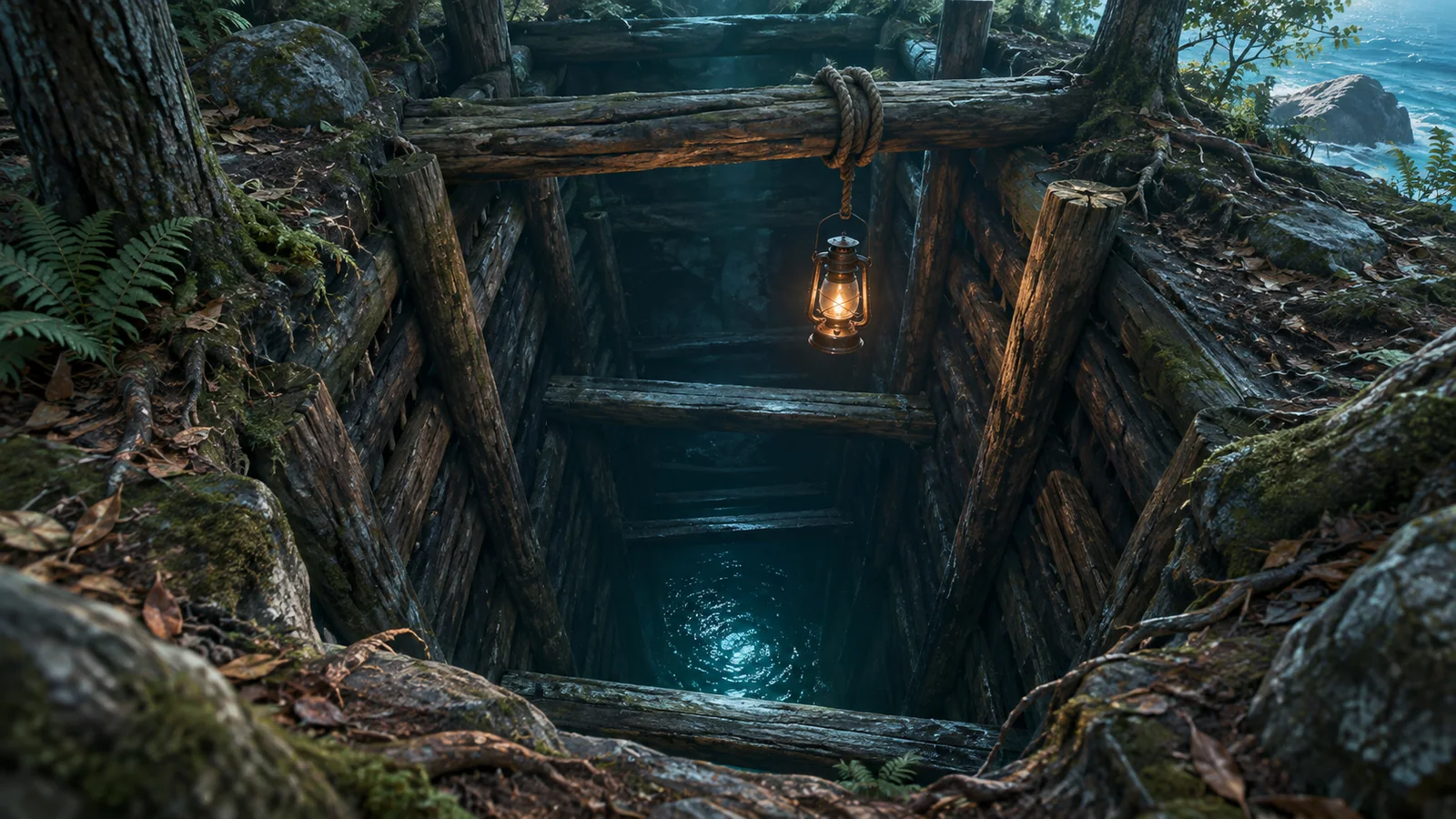
According to those accounts, a group called the Onslow Company sailed over around 1802 to finish the job. The diggers reached about 90 feet (27 m), reporting log platforms roughly every 10 feet (3 m) along with charcoal, putty, coconut fiber and a large stone carved with symbols. Then the water came: one 1862 account says that once they were 80 to 90 feet down, seawater rose in the shaft to the 33-foot (10 m) mark, and no amount of bailing could clear it.
The Carved Stone No One Can Check
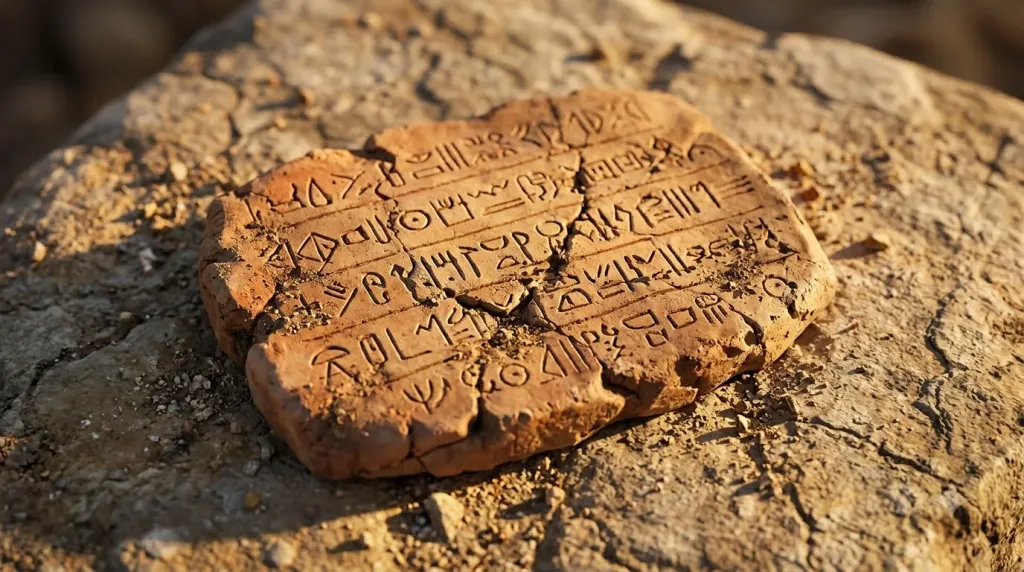
The stone is the most tantalizing find, and the most frustrating. John Smith reportedly built it into his fireplace, carving facing outward for visitors to admire. Decades later it was sitting in a bookbinding shop. A worker there, employed from 1890, recalled that the symbols had worn off and that the slab served as a weight for pounding leather; the shop closed in 1919 without anyone keeping it, and a search in 1935 came up empty.
That has not stopped people from reading it. The Harvard biologist Barry Fell, who spent a second career on ancient inscriptions, argued the symbols were a Coptic religious text, but no rubbing of the original survives, so no translation can be checked.
Two Centuries of Digging
Drills, Parchment and a Future President
Treasure companies have kept digging for more than two centuries, each going deeper than the last. The Truro Company was reportedly formed in 1849. In 1897, the Oak Island Treasure Company bored down to 126 feet, where its drill passed through oak and then struck iron. A second boring, near 153 feet, lifted a speck of parchment the size of a grain of rice.
In August 1909, an expedition arrived on behalf of the Old Gold Salvage group, whose members included a young Franklin D. Roosevelt; by then the pit had been cleared to 113 feet (34 m), and none of the borings turned up anything of interest.
Borehole 10-X and the TV Era
In 1971, the company Triton Alliance sank a 235-foot (72 m) shaft lined with steel, known as Borehole 10-X. Cameras lowered into a cavity at the bottom reportedly showed possible chests, remains and tools, but the footage was murky, none of it was ever confirmed, and Woods Hole scientists who reviewed it said nothing conclusive could be seen. When divers finally went down in 2016, they found no artifacts.
The modern era belongs to two brothers from Michigan, Rick and Marty Lagina, who bought half of the island’s tour company in 2006; their hunt has aired on History as The Curse of Oak Island since 2014.
What Could Explain the Pit
A Natural Sinkhole
The simplest explanation for the Oak Island Money Pit is geology. The investigator Joe Nickell argues there is no treasure at all, only a natural sinkhole connected to limestone caverns. Marine geologist Gordon Fader and historian Joy Steele cite 1960s dye experiments showing that most of the water came in deeper than 140 feet, and a 1996 trial in which dye poured down a nearby borehole never reached the shoreline; they conclude that the island’s natural rock accounts for the flooding. The two also think the top of the shaft may be the remains of an old tar kiln that slumped into a natural hollow. Tellingly, workmen digging a well on the shore of nearby Mahone Bay in 1949 found a similar pit.
Old Timber and Exotic Fiber
Some finds are genuinely old. At Smith’s Cove in 1970, Triton exposed a U-shaped arrangement of huge logs, and tree rings show the trees were cut in 1769, a generation before McGinnis’s dig. The coconut fiber is another puzzle, since the nearest coconut palms grow at least 1,500 miles (2,400 km) away; its 11th-to-14th-century date may belong to old packing from a ship’s cargo rather than to the shaft.
The story itself may have older roots, too. Nickell notes parallels between the Oak Island accounts and the “Secret Vault” allegory of York Rite Freemasonry.
A Hole Full of Questions
The honest answer is that the original diggers, their date and their purpose are all unknown, and even the location of the first shaft was lost during excavations in the 1960s. That last detail matters more than any single find. Like the Lost Colony of Roanoke, Oak Island is a mystery in which the key evidence has been disturbed or lost, and each new dig makes the original harder to recover.
Sources
- The Oak Island Money Pit: Discovery, Depth and Finds Since 1795 (thecurseofoakisland.com)
- Oak Island mystery – Wikipedia (wikipedia.org)